


The people of Njombe region face wide range of different problems and difficulties. For example, many of them have an insecure income, therefore they cannot fulfil basic needs like buying food and clothes or having proper or decent shelter. Therefore, they cannot earn enough money. A vicious cycle is a result. In addition to that the whole world community faces climate change and the tremendous loss of biodiversity.
Planting avocado trees can help to reduce both. People can harvest and sell avocados and generate a regular and adequate income. And it’s also good for the environment. A tree can combat climate change by absorbing CO2 and strengthen biodiversity by giving shelter to different animals especially insects but also to reptiles, amphibians and birds. Furthermore, trees reduce soil erosion, improve soil nutrients and purify water and air.
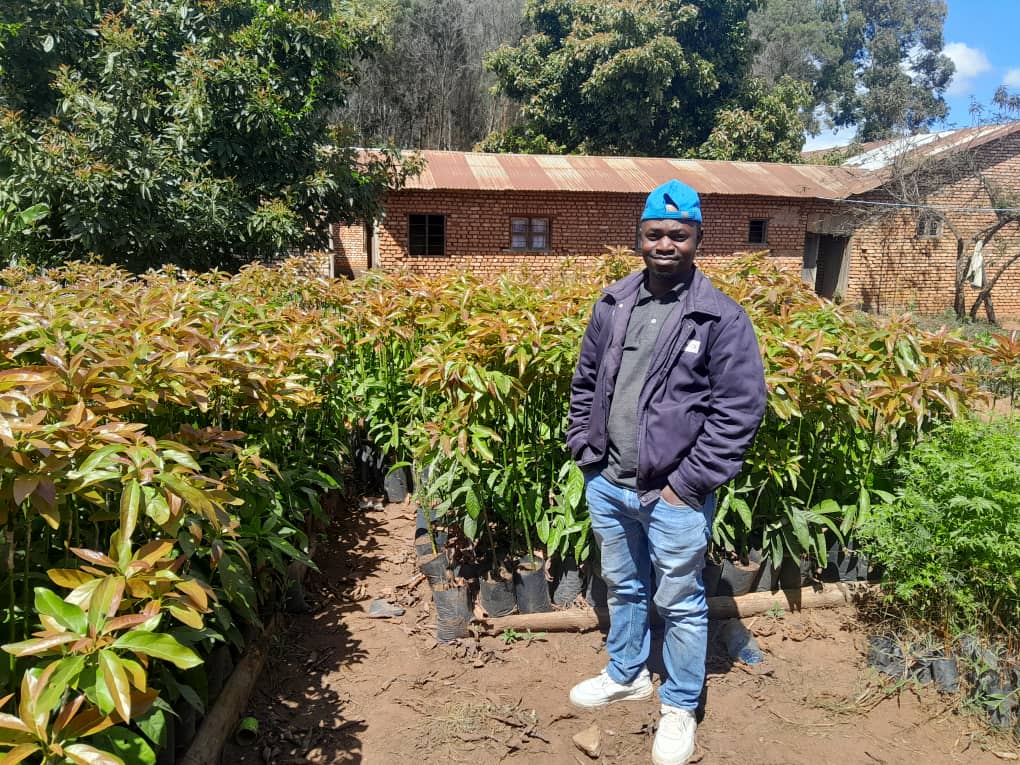
To provide avocado seedlings PADECO created an avocado nursery in the year 2022. Here you can find some information about our project.
General information about avocado trees:
Avocado trees originally only grew in Central America but nowadays they grow all over the world where the conditions are appropriate. Avocado trees need nutrition-rich soil and there has to be enough water but not too much (one tree needs 1000 litre to grow). They also need many hours of sunlight to grow. They can store between 200 and 500 kg CO when they are fully grown although it’s hard to estimate an exact number. Per year you can harvest several hundreds of fruits, which are very healthy and nutritious. They are a good source of heart-friendly fat as well as of fiber. Also, the fruits contain vital vitamins like Vitamin C, E, K or B.
Avocado nursery of PADECO:
As already mentioned, the work at the avocado nursery started in the year 2022. So that the seedling can grow successfully, the staff of PADECO carry out different tasks. We put the little seedlings of a traditional sort into plastic bags and water them multiple times per week. We also weed them several times. When the roots are strong enough, a modern and more productive sort can be grafted on the seedlings of the traditional sort, which is more resilient. When modern sorts are grafted on the top of a local variety the positive aspects of both can be combined. The trees are both afterward more productive and more resilient to diseases.
After twelve months they are ready to be planted in a region that is rich of water (rainfall as well as water for irrigation). If you want to plant them in a dry area, they have to be stronger, so the time in which they stay in the nursery will be longer. The majority of the seedlings are used for our reforestation projects, some of them are also sold to get money to maintain the nursery. Since the implementation some problems did occur. Most of them have been solved. For example, fetching water to water the plants was very time-consuming and tiresome. Now we have a water pump to reduce time during watering. The pump can easily spread water all over the garden in a short span of time.
We are sure that we can start to plant the seedling this year. We have already received orders for about 1000 seedlings. We confidently believe that our reforestation program with fruit trees will success in a foreseeable future.