
In rural Tanzania, a single water point can change everything ; who gets sick, who stays in school, who has time to earn. PADECO is building not just infrastructure, but the community stewardship to keep it flowing for generations.
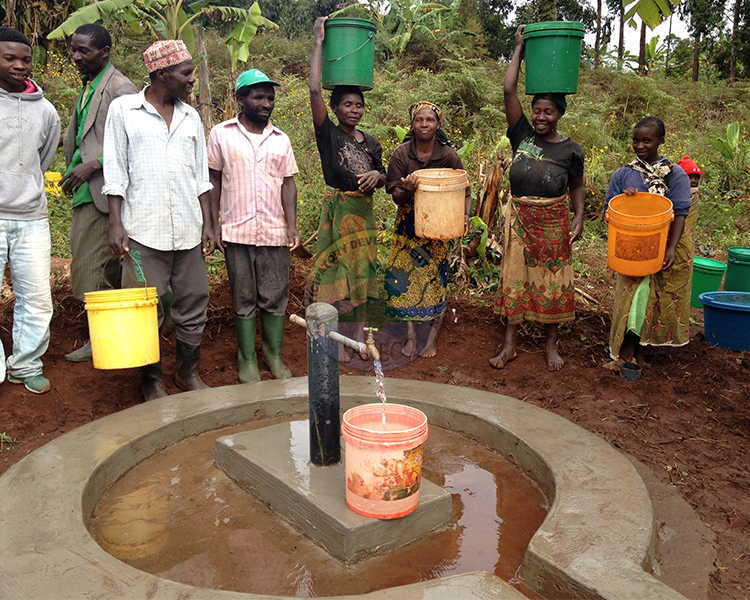
Consider what happens before the first cup of clean water is drawn from a new water point. There are the hours, sometimes a full morning, spent walking to a distant river or shallow well that may or may not be safe. There are the waterborne illnesses that cycle through households, pulling children out of school and adults out of productive work. There is the quiet, constant weight of a burden carried almost entirely by women and girls, whose time and bodies absorb the cost of a problem they did not create.
This is the reality that PADECO works to dismantle, one water project at a time, in communities across rural Tanzania where access to clean and safe water remains one of the most fundamental unmet needs.
What the last year delivered
In the last financial year alone, PADECO successfully completed 3 water projects, each one a combination of physical infrastructure and community systems designed to serve those communities not just today, but for decades ahead.
- 3 Water projects completed this financial year
- 3,000+ Households now served with clean water
- ↓ Dramatic reduction in waterborne diseases
Behind each of those projects is a deliberate combination of approaches, chosen because no single solution works in isolation when communities have different landscapes, population sizes, and rainfall patterns.
How PADECO builds for the long term
- Water point construction: Permanent, community-accessible water points designed for durability and ease of maintenance in rural conditions.
- Rainwater harvesting systems; Capturing seasonal rainfall to extend water availability through dry periods — reducing dependence on distant, often contaminated sources.
- Community-led water management training; Equipping local water committees with the technical knowledge and organizational skills to manage, maintain, and sustain their water sources independently.
That third pillar, training, is where PADECO’s approach diverges most sharply from a conventional infrastructure project. A water point with no community ownership is a water point waiting to fall into disrepair. PADECO’s goal is not to hand over a structure. It is to hand over the capability.
The ripple effect of clean water
The benefits of reliable water access rarely stay confined to a single domain. They move outward into health outcomes, school attendance, household income, and gender equity in ways that compound over time.
When water is close, safe, and reliable:
- Waterborne diseases drop sharply, reducing healthcare costs and child mortality
- Girls stay in school longer, freed from daily water collection duties
- Women reclaim hours each day for income-generating activities
- Communities reduce pressure on fragile rivers and wetland ecosystems
These are not secondary outcomes. For the families that have lived without reliable water access, they are the entire point.
PADECO’s work in water and sanitation is ongoing. Three projects completed in one year is a milestone, and a foundation to build from. The goal is not a number of water points. It is a Tanzania where no family’s morning begins with a hours-long walk in search of water that may not even be safe.
That future is within reach. And every project completed brings it closer.
“Clean water access is not an infrastructure project, it is a human dignity project. Your support can literally save lives and transform communities.”