
Four primary schools. 2,348 beneficiaries. Firewood consumption cut by 60%. Cooking time cut by 40%. And children who finally have more time to learn than to gather wood.
It is easy to think of cooking stoves as a small thing. They are not.
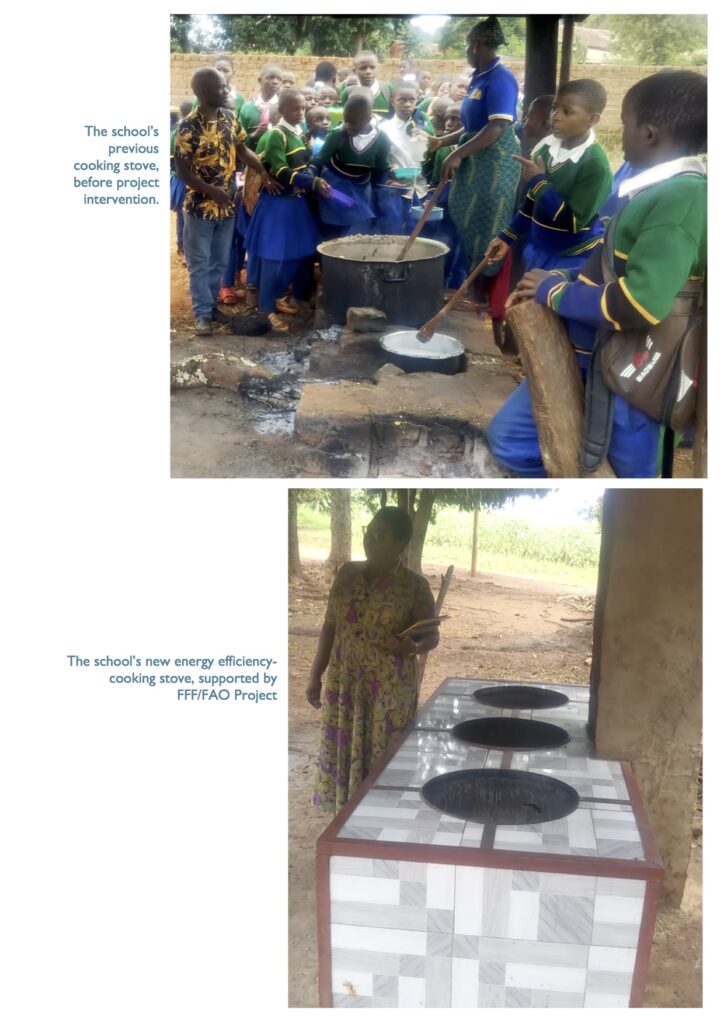
In rural primary schools across Ludewa District, the traditional three-stone fire defined the rhythm of the school day, and not in a good way. Meals took up to four hours to prepare. Pupils were sent into distant bushes and forests twice a week to collect firewood, time that should have been spent in classrooms. Kitchens were thick with smoke. Teachers and cooks bore the health burden quietly. And children arrived at lessons already tired from labor that should never have been theirs to carry.
That was the reality. Then the stoves arrived.
“We never dreamed of such a wonderful transformation. Our firewood usage has dropped, and cooking hours have significantly shrunk. Our pupils have more time for their studies, and school attendance has improved because they can eat earlier. In the past, pupils struggled to carry firewood to school twice a week from distant bushes and forests, now they only need to bring it once, allowing them to focus more on their education. Please convey our heartfelt gratitude to our donor, FAO, for this incredible support.”
— Head Teacher, Luana Primary School · Luana Ward, Ludewa District
The numbers behind the change
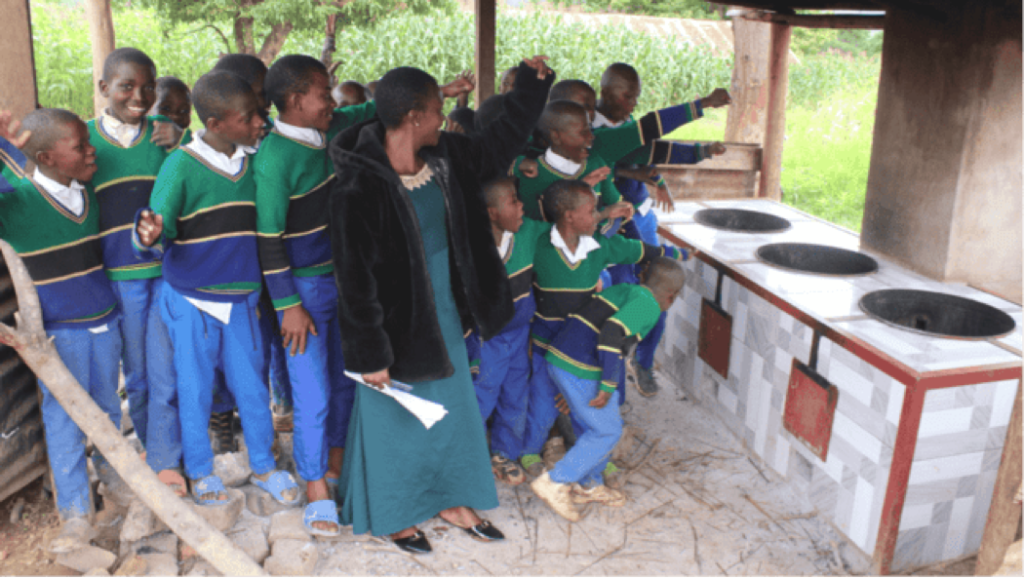
Through the Forest and Farm Facility (FFF) Project, funded by FAO and implemented by PADECO, four primary schools in Luana and Ludewa wards have been equipped with energy-efficient cooking stoves. The results are measurable and immediate:
The results are measurable and immediate:
- 4 – Primary schools equipped
- 2,348 – Direct beneficiaries
- 60% Reduction in firewood consumption
- 40% Reduction in cooking time
School meals that once required four hours over a three-stone fire are now ready in a fraction of that time. Fast heating, uniform temperature control, and significantly lower smoke emissions have transformed kitchens that were once hazardous workplaces into functional, hygienic spaces. The health burden on cooks and teachers, years of chronic smoke exposure has been substantially reduced.
Before and after
Before
- Up to 4 hours to prepare school meals
- Pupils collected firewood twice a week from distant forests
- Heavy smoke exposure in kitchens
- Meals delayed, attendance affected
- Accelerated deforestation of surrounding forests
After
- Meals prepared in a fraction of the time
- Firewood collection reduced to once a week
- Lower smoke emissions, improved kitchen hygiene
- Earlier meals, better attendance and study time
- Reduced pressure on local forests and biodiversity
A stove that does more than cook
What makes this intervention remarkable is how many problems it solves at once. It is an education intervention; children are learning more because they are doing less labor. It is a health intervention; kitchen staff and pupils breathe cleaner air. It is a gender intervention; the burden of firewood collection and prolonged cooking has historically fallen on women and girls. And it is an environmental intervention, with a 60% reduction in firewood consumption meaningfully reducing the pressure on the forests and landscapes that surround these communities.
This is the kind of outcome that PADECO and FAO set out to create: one action, multiple wins, and a community that can feel the difference every single school day.
The Head Teacher of Luana Primary School said it best; this is a transformation no one dared to dream about. The work now is to make sure every school that still cooks over a three-stone fire gets the chance to dream it too.
This intervention is part of PADECO’s implementation of the Forest and Farm Facility (FFF) Project in partnership with FAO, serving Luana and Ludewa wards in Ludewa District, Njombe Region.