
65 community members trained. Three critical skill sets transferred. One guiding conviction that lasting development only works when the people it serves are equipped to own it.
Technical assistance alone does not create sustainable change. Equipment without the knowledge to use it well depreciates. Funding without local ownership evaporates. PADECO has long understood this and it shapes how the organization engages with every community it works in.
At the heart of PADECO’s programming philosophy is a straightforward but demanding commitment: every stakeholder in a project from the frontline beneficiary to the implementing partner, must be equipped not just to participate in it, but to manage, improve, and sustain it long after the program cycle ends.
That means the capacity to plan. To design. To monitor, assess, and report for decisions. To course-correct when the evidence demands it. This is stewardship and it is what PADECO builds.
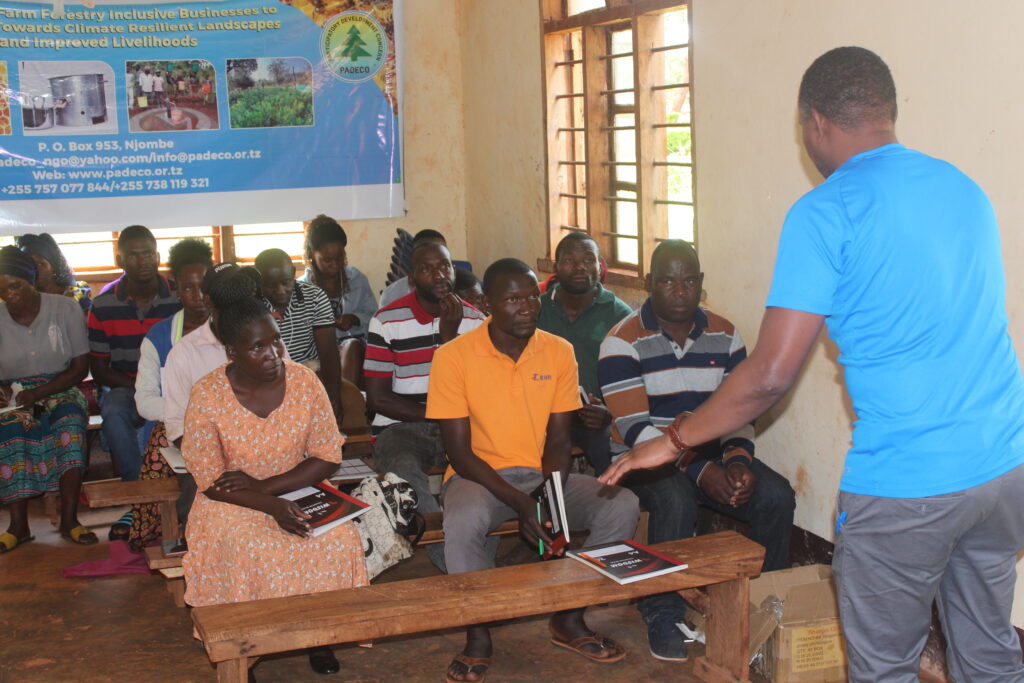
Four days in Ludewa: the training of trainers
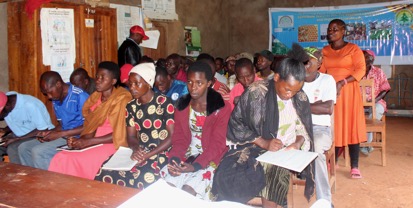
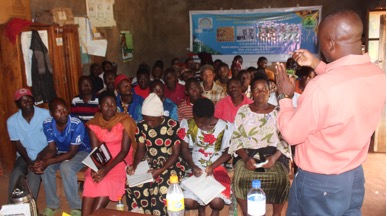
From February 24 to 27, 2025, PADECO conducted a Training of Trainers (ToT) for grassroots beneficiaries across Ludewa and Luana wards in Ludewa District, a cohort that did not stop at primary project beneficiaries. Local residents were actively invited, because the knowledge generated here belongs to the whole community.
- 65 – Total trainers of trainees
- 37 – Primary beneficiaries from 2 beekeeping groups
- 28 – Additional community members
The training was built around three themes, each chosen because it addresses a real, persistent barrier to sustainable livelihoods in the district:
- Climate change mitigation through forestry garden establishment
- Practical skills for building integrated forest gardens that restore land and generate income simultaneously.
- Modern beekeeping, honey production and processing
- Contemporary techniques to increase honey yield, quality, and marketability for local entrepreneurs
- Financial literacy and business skills (IGA and SILC model)
- Tools to manage income-generating activities and build savings through the Savings and Internal Lending Communities model.
The methodology was deliberately hands-on. Sessions combined shared experience with actionable frameworks designed so that participants could return to their wards and apply what they learned immediately, without waiting for further guidance or outside support. That is what “training of trainers” means in practice: multiplying competence, not dependence.
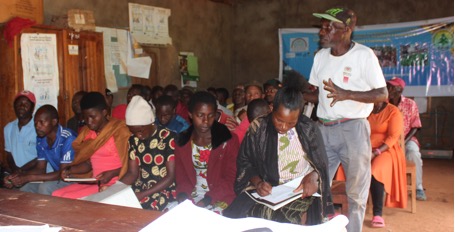
Equipment that compounds the investment
Beyond the classroom, PADECO has backed these communities with the physical infrastructure their enterprises require. With funding support from the Forest and Farm Facility (FFF) through FAO, beneficiaries received modern equipment across three critical areas:
- Honey extraction and processing equipment
- Tree nursery establishment
- Irrigation infrastructure
Each piece of equipment is more than a resource, it is a multiplier. A honey extractor raises production quality and volume. A tree nursery with irrigation infrastructure allows seedling production at scale, season after season. Together, they expand and diversify what these green enterprises can offer, and what they can earn.
The combination of strengthened human capability and modern physical infrastructure is precisely the point. One without the other is fragile. Together, they create the conditions for communities to grow their enterprises, conserve their environment, and generate income on their own terms sustainably, and with increasing confidence.
This is what PADECO means by results. Not outputs delivered to communities, but capabilities built within them.
This capacity building initiative is part of PADECO’s implementation of the Forest and Farm Facility (FFF) Project in partnership with FAO, focused on Ludewa District, Njombe Region.